
Idaho Arrest Record Public Access
Adults' basic arrest details usually start with the Idaho agency that holds the file. The Idaho Public Records Law treats a core set of arrest and incident facts as public. Other protections still apply. It never promises full access. Reports, images, audio, and live investigations can stay closed.
Under Idaho Code §74-124(3), that core includes the nature of the reported incident. The time, date, and place count too. So does the charge. The statute also covers the arrested person's name, sex, age, and address, subject to other rules. It adds documents handed to the arrested person, informations, indictments, and criminal-history reports. State, county, and city agencies all fall under it. The law reaches from Idaho State Police to local sheriffs. Treat it as a floor, not a mandate to post each item on a website.
Section 74-124(1) then shields investigatory material. Disclosure can be withheld. The reasons include interference with a case, harm to a fair trial, or an invasion of privacy. The same goes for confidential sources, investigative methods, officer safety, and child-abuse reporting parties. Inactive files follow a different disclosure rule. Ask the record holder what was withheld and which statute supports that call.
The official text of Idaho Code §74-124 sets out these public-record and investigatory-record limits.
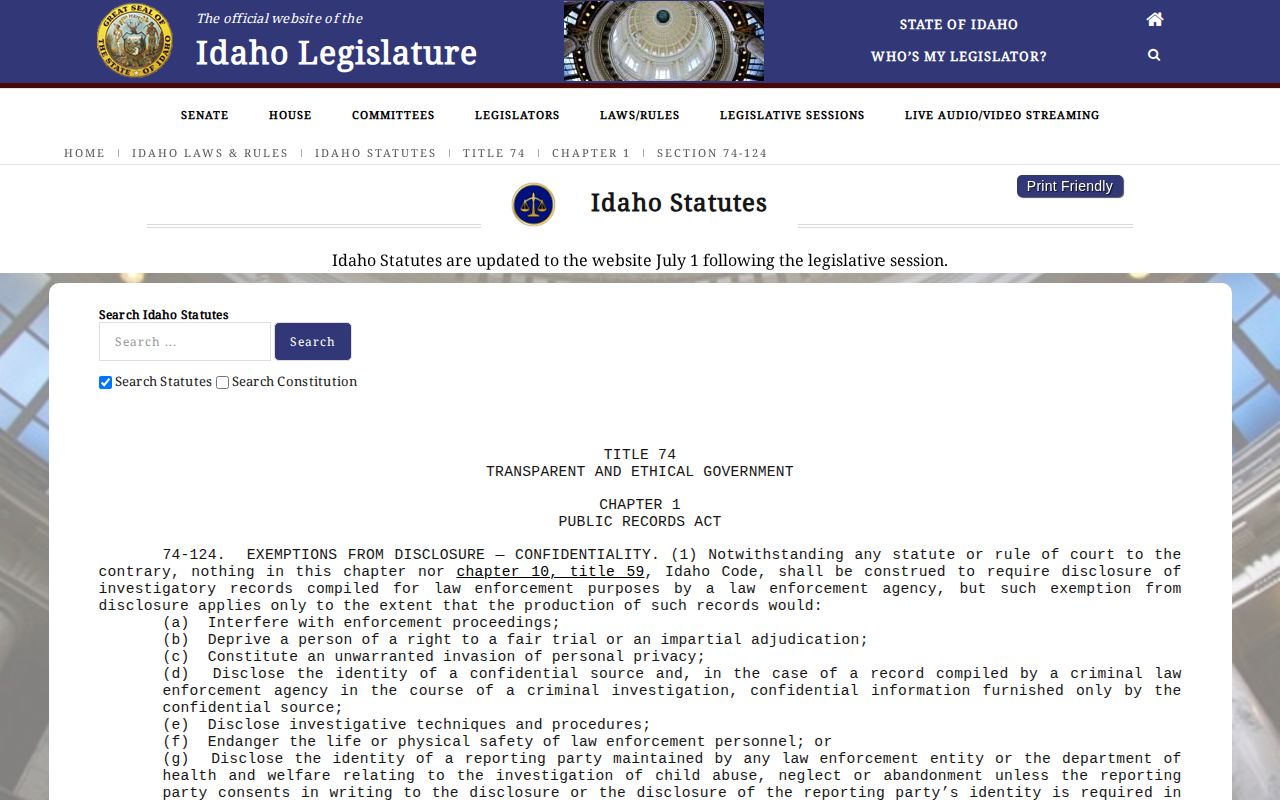
The statute splits basic arrest facts from protected investigative material. It says nothing that requires an associated photograph to appear online.
Idaho Booking and Mugshot Rules
Booking starts in statute. Idaho Code §20-601 puts county-jail administration in the sheriff's hands. It also spells out the booking process. Photographs and fingerprints are part of the booking information. That is why an image exists in the jail or law-enforcement system. Nothing in the text orders a sheriff to publish it online. Nor must a sheriff run a public photo archive for a set term or scrub copies from other sites after release.
Display choices belong to each county. Ada and Canyon County arrest pages show images in their booking-style views. Bonneville's current roster includes an image. Power County displays one at the booking-detail level. Kootenai's Daily Press Log and Twin Falls' dated reports stay text-only. These habits can shift, and a missing photo on one screen proves nothing either way.
Idaho has no enacted statute that broadly bans publishing booking photos. None bars pay-to-remove schemes or grants every person a removal right against each website. A 2022 proposal, House Bill 620, covered a narrow mental-health treatment situation. It never became law. Idaho v. Alwin concerned a booking photo used in a criminal case, not any private publisher's duty to delete. For the statute's own words, the Legislature posts the §20-601 text. It lists photographs and fingerprints among booking details.

The booking statute explains the agency's own record. Online publication and third-party copies raise different questions entirely.
A 2026 Idaho Statesman report described a tort claim tied to an Ada County Sheriff's Office and third-party publication dispute. The report noted no lawsuit or settlement had been filed, and the agency said it would not press copyright claims further. That account reflects a policy fight, not a court holding or a statewide mugshot law. Label a third-party post as such. Government endorsement should never be implied.
Request Idaho Arrest Records
Send each request to the office that holds the record. Want a county booking sheet or booking photo? That belongs with the sheriff or jail in the arrest county. An ISP incident report goes through the Idaho State Police Public Records Center instead, and a court filing lives in iCourt. The Idaho County Directory links to local systems. For the state agency's own channel, the ISP arrests page spells out how those requests work.
Idaho law keeps agencies on a clock. A resident's written request gets an initial response within three working days, per current Attorney General guidance. When retrieval runs long, the agency must send notice and may take up to ten more working days to grant or deny the request. Nonresidents can wait as long as 35 days. Watch your mail after filing. An automated receipt only confirms delivery, so keep that confirmation and look for an estimate or a clarification question from the staff. That estimate letter tells you whether the work has truly started.
Fees start low for Idaho residents. The first two hours of labor and the first 100 paper pages are generally free, with allowable actual costs kicking in past that point. Large or specialized requests can draw an estimate first. Narrow the ask when the search looks broad. A written cost estimate up front saves surprises. Formats and circumstances vary, so read the agency's current instructions before you pay anything.
- Identify the arresting agency, county, approximate date, and the person or event. Include a booking, case, or incident number if you have one.
- State that the message is an Idaho public-records request and name the item, such as an existing booking sheet, arrest report, or photograph.
- Ask for nonexempt portions if another part of the file is withheld. Request the exemption citation and appeal route if the agency denies access.
- Submit through the holder’s official form or portal. Keep the receipt, estimate, response, and any records sent.
The official Idaho Code §74-103 governs request response times and related duties.
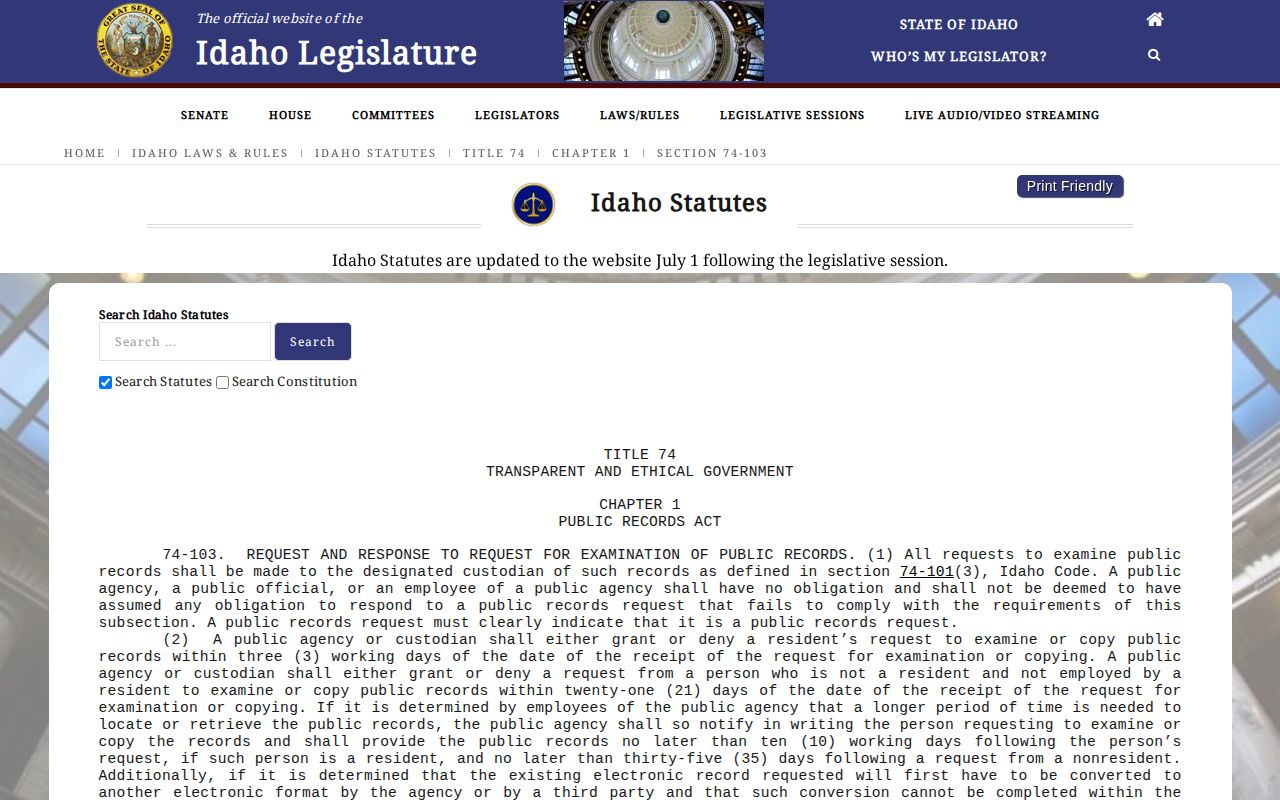
Fee schedules shift too. Check current law before trusting an old deadline. The Idaho Attorney General public-records page lays out the resident and nonresident framework and links to the state manual.
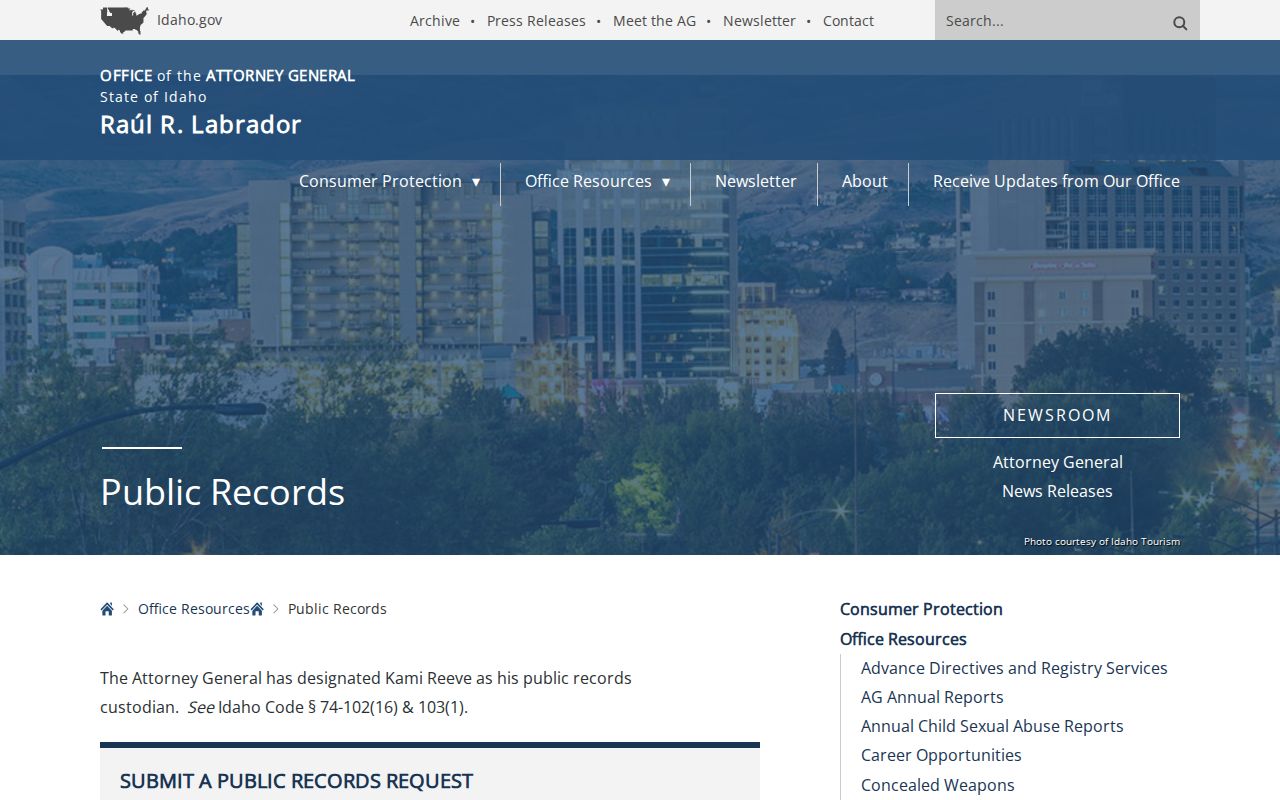
The AG guidance sets timing, not custody. Each county booking record stays with the office that holds it, since no single state office keeps them all.
Juvenile and Protected Arrest Files
Juvenile files are not adult booking records with a smaller age number. Idaho treats them differently. Access turns on the Juvenile Corrections Act, juvenile court rules, confidentiality statutes, and whatever a court order says. The Idaho Supreme Court posts the juvenile rules. The Idaho Department of Juvenile Corrections publishes its Act and Rules booklet. Idaho Code §20-525A offers expungement. Never mine a public roster for a protected juvenile name.
Adult files face limits too. Idaho Code §74-105 lets agencies withhold or redact protected material, and other provisions work alongside it. An active case, a privacy interest, or another exemption can shrink what an office releases. A missing name or photo can mean a legal bar, a local publishing choice, a delay, or a different custodian. Gaps are common. A blank entry proves nothing by itself.
Request the separable public parts. A custodian can often release those while holding back what the law protects. Never ask for confidential names or images. A court clerk, a records officer, or counsel can explain what an order allows, and any real change in access should trace back to an order or statutory process rather than a social-media claim.
Expungement and Idaho Record Law
Fingerprint-based arrest records sit in one state place. The Idaho State Police Bureau of Criminal Identification keeps the repository, fed by reports from criminal-justice agencies across Idaho. ISP allows a written request under Idaho Code §67-3004(10) for certain arrests. Qualifying cases include no indictment or information within one year, acquittal on all offenses, or dismissal of every charge. Identify the arrest clearly. Give enough agency and court detail for a clean match to the record. The ISP Criminal History page explains the process.
One dismissal works differently. A withheld judgment under §19-2604(1) counts as an exception to the ordinary ISP route. And it changes less than people hope. The fingerprint record, court file, county booking entry, and private copies can all still exist. Confirm the exact disposition and procedure, secure the order that changes access, and send it to every custodian still showing the old information.
The IDAPA 11.10.02 rule covers ISP's side. It lists the supporting records and explains how an expunged repository entry is marked and dropped from future copies. That is state handling only. No rule reaches a county roster image, a news story, a search cache, or a commercial page.
The Clean Slate Act runs on court shielding. Eligibility starts after at least five years from sentence completion, counting probation, parole, fines, and restitution. Shielding blocks public access. It does not destroy the records. The current court page explains eligibility and petition steps. Use the order's exact language when asking a custodian to update a record. The Idaho courts' Clean Slate page shows the petition-to-shield process and the court's form route.
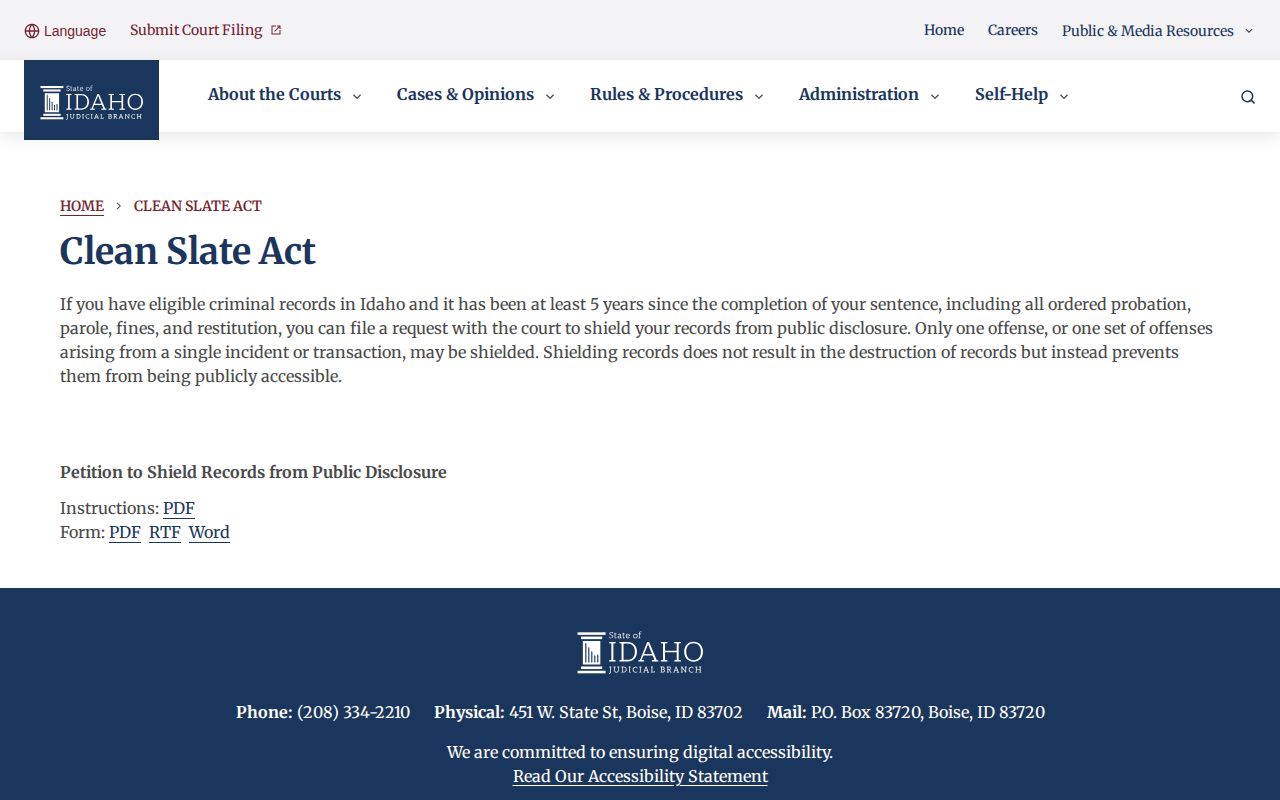
Shielding is a court access status. It stops public view without destroying the record or erasing outside copies. Qualifying arrests and dispositions follow a separate repository request. The ISP Criminal History page gives the official steps, so read them instead of assuming a dismissal clears the state record automatically.
Idaho Arrest Image Corrections
Corrections start at the source of the display. Ask whichever office shows the wrong or outdated entry. Bring the record number or the exact page. If a court order changed the official file, send a copy. The agency that keeps the record is the right recipient. A search engine can be asked to recrawl a fixed page, yet that fixes neither the source page nor a private publisher's separate copy of it.
Several free correction routes exist, and each has its own scope. RecentlyBooked waives its fee for removal, suppression, or modification requests and lists categories like dismissed, expunged, sealed, incorrect, outdated, wrong-person, juvenile, and duplicate entries. Mugshots.com offers a no-charge record-maintenance path for qualifying orders or errors. BustedNewspaper posts a form marked no fee. It asks for identifying details and legal documents, then gives a review estimate. None of them promises to erase every accurate current public entry.
Arrests.org displays a record-removal link. Beyond that link, no general Idaho policy establishes a free process, a set fee, or a guaranteed response time. Statewide news outlets publish no dedicated mugshot opt-out either. A newsroom may fix a factual error. It may also note a later disposition. Still, accurate reporting and the official record remain two different things.
| Route | What it can change | Important limit |
|---|---|---|
| Official custodian | A source record or agency page after a verified correction or order | Each office controls only records it holds |
| ISP expungement | Qualifying state repository information under §67-3004(10) | Withheld-judgment and other exceptions apply; county copies may remain |
| Clean Slate court petition | Public access to eligible records under the court’s shielding order | Shielding is not destruction and does not recall outside copies |
| Publisher correction policy | A publisher’s own page when its criteria are met | Each site decides under its terms; no result is guaranteed |
| Search engine refresh | A search result after its source page changes | It does not remove the source or another copy |
RecentlyBooked's published policy spells out its no-fee request categories. Mugshots.com posts its own free record-maintenance policy. Neither link is an endorsement or a promise of removal.
Skip intermediaries who guarantee erasure, claim control of every site, or say Idaho law compels every private copy to vanish. Correct the official record through its custodian. Share any valid order. Then contact each outside publisher separately.
The Archives' searchable catalog helps locate older state collections, while its Old Idaho Penitentiary page covers a historic collection rather than a current booking-photo feed.
Archive searches never replace a current county booking request.
Idaho Arrest Records and Retention
The Idaho State Archives opens the door to state, county, and city records from sheriffs, police departments, and courts. Its searchable indexes and catalogs help locate a collection. Not everything is cataloged, the Archives warns. Historic penitentiary records cover residents from 1864 through 1947. Photos, identification descriptions, and parole papers may appear in those files, but they are prison history, not a modern booking roster.
The 2008 Law Enforcement Records Retention Schedule governs retention. It sets record-series directions for booking books, communications logs, sealed or expunged files, juvenile custody records, mugshots, master name indexes, and request files. Some homicide and felony booking records and images stay on permanent retention. Misdemeanor, communications, juvenile, and request series follow administrative-closure periods instead. The schedule's shorthand for that trigger is "AC," though it promises no five-year life for an online image.
Agencies may follow current local schedules or run different systems and series. Ask the county custodian which schedule applies now. Ask whether the image sits in an incident file. Also ask whether that file was transferred or destroyed. An Archives inquiry should name the person, the county or institution, the date range, and the record type. The Archives keeps research help separate from a formal public-records request.
A current booking question goes back to the county source or that jail's records unit. A state criminal-history entry goes through ISP. A filed case runs through iCourt. A historic file belongs at the State Archives. Each route answers a different question and may need its own request.