
Idaho Police Blotters Record Different Events
There is no single statewide arrest log for Idaho. Each county sheriff chooses a format. Some run rolling arrest pages or jail rosters, others publish daily reports or press logs. The Idaho State Police issues selected enforcement releases. Local news picks the cases it covers. A booking itself is the jail intake that follows an arrest. No blotter captures every one of them.
Formats behave differently over time. A rolling log holds a few days of entries. Daily PDFs are grouped by date. Someone can stay on a jail roster after the arrest page ages out. A news article stays searchable long after the roster moves on. For arrests in the last day, the Idaho same-day arrest view is the better fit. A multi-day blotter casts a wider but less uniform net.
Read the label first. An arrest, a booking, a release, a court filing, and a conviction are all separate events, and a blotter entry marks only the first step in that chain.
Find an Idaho County Arrest Log
Official county pages show a mix. Blaine rolls older pages, Kootenai posts a Daily Press Log, Twin Falls issues weekday Arrest/Release reports, and Bannock separates its jail roster from dated AlertSense reports. Their windows and fields vary, as the table shows.
| Official source type | Window or archive | How to read it |
|---|---|---|
| Blaine County arrest page | Rolling multi-day view with older numbered paths. | Older paths may not stay complete or official; each page has its own fields. |
| Kootenai County Daily Press Log | Dated daily PDF; its reviewed boundary ran from 05:00 to 05:00. | Name, age, offense, court status, and bond (money set as a release condition); text-only. |
| Twin Falls County reports | Weekday reports, with holiday pauses. | Jacket number, name, date of birth, booking/release times, reason, agency, and case fields; no photos in reviewed PDFs. |
| Bannock County activity reports | Dated reports with a history view; alert IDs can change. | May show agency codes, arrest date/time, and offense summaries; app fields differ. |
| Counties without a stable public archive | Phone, records form, VINE, or current roster may be the official route. | No online archive located is a real result, not a reason to substitute a third-party list. |
The Idaho County Directory points to the sheriff or jail that handled a booking. The Kootenai County report hub is a good illustration. Its daily log sits apart from the current custody list.
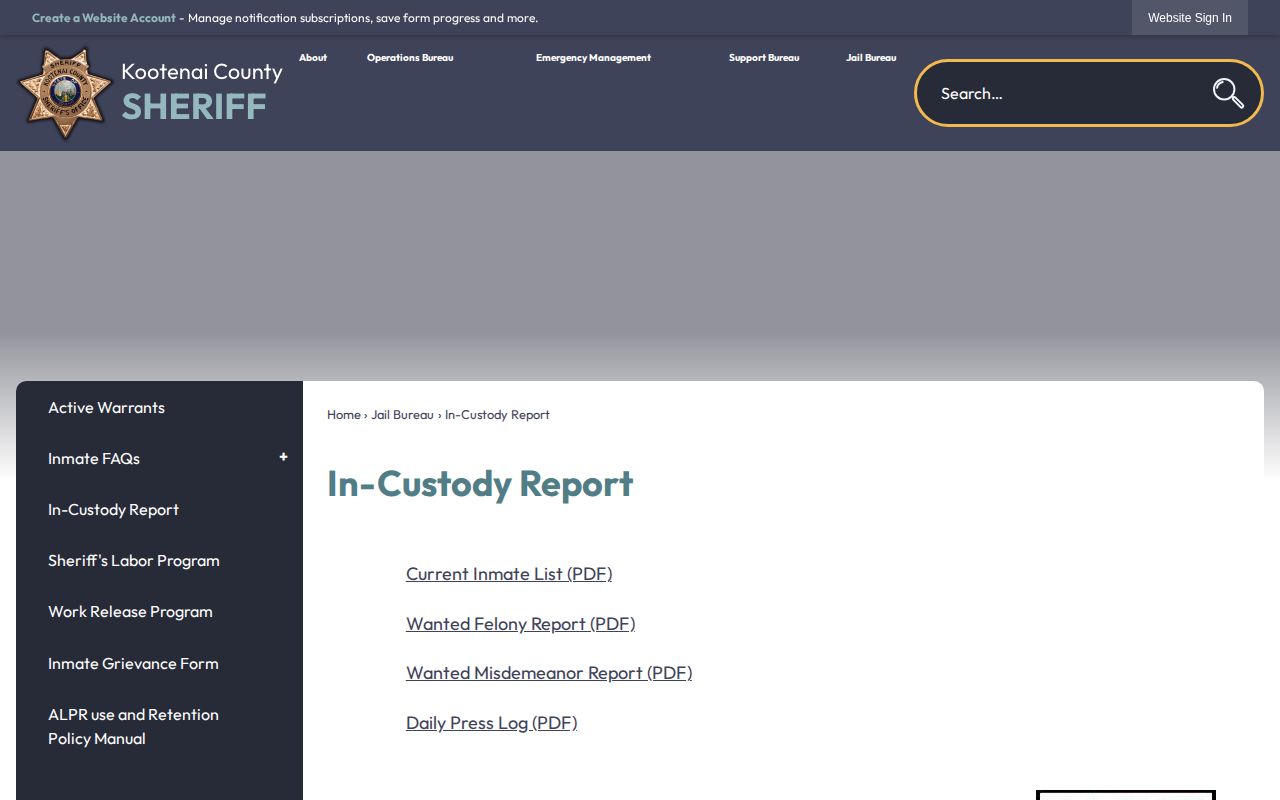
That separation matters for searchers. A person can drop off the custody list while the dated report stays up, or the report can expire before the booking file does. Note: An online window measures what the agency chose to publish, not the full retention period for its official records. For a statewide multi-day check, start at the county level.
- Open the arrest county's official sheriff or jail site, then look for a dated report, rolling blotter, or archive index.
- Read the report date, time span, and field notes. A booking, release, call, and court filing can appear on different dates.
- If the entry has rolled off, ask the records custodian for the specific booking record using the name, date, county, and arresting agency.
Idaho State Police Arrest Releases
The Idaho State Police newsroom publishes enforcement news, safety notices, and case updates. It is not a daily booking feed. Releases tend to cover crashes, operations, or investigations. Routine bookings stay inside county jail systems. ISP publishes no complete roster of the people it arrests.
When ISP makes an arrest, the person enters county custody. The public trail then runs through that county jail and the arresting or custodial agency. Housing depends on jurisdiction, open beds, outside holds, and transfers. A release explains the event. It never replaces the county booking sheet or the later court docket. The official ISP News Releases page is the right source for agency announcements. Keep the release date handy. You will want it when you follow a case.
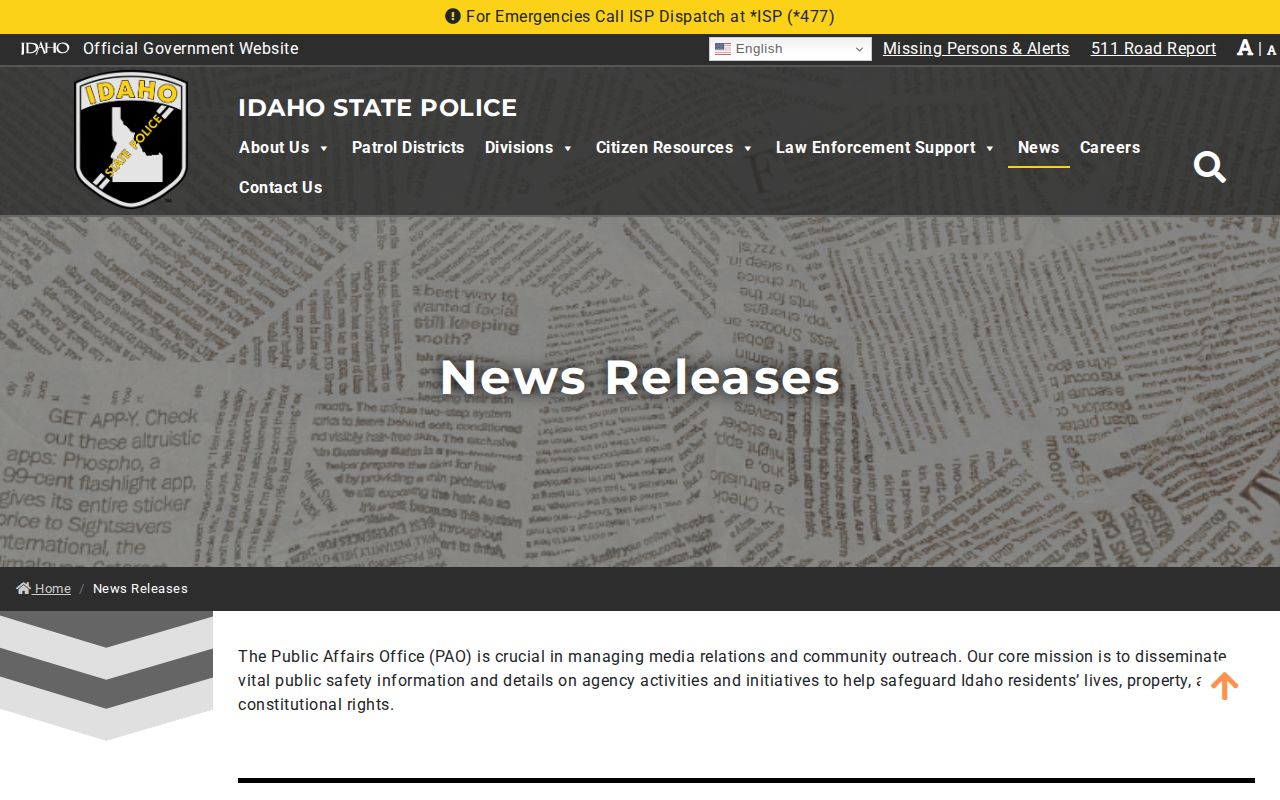
A newsroom release is a primary agency statement, but it is still selective. For booking details, check the county custodian; for the filed charge or outcome, check the court.
Idaho Arrest Statistics Are Not a Roster
Idaho also keeps a statewide statistics layer. ISP's Crime in Idaho arrest distribution report gives aggregate counts for a reporting period. That helps place a trend in context. It cannot say who was booked today. It shows no individual booking record. There is no public photo list. A count may reflect the reporting agency's data rules and period rather than a live tally of arrests.
Use the numbers for broad questions about reported arrest patterns. Do not try to verify one person's custody. For an individual, return to the county roster or records unit. For a filed charge or a final outcome, use the court record. ISP's Citizen Connect page links to a recent incident and case visualization. Its fields depend on the current data set. It is not a named arrest roster or photo feed.
Treat the Idaho arrest distribution report as an aggregate reference. It is no named list of Idaho arrests.
Idaho News Can Outlast Arrest Rosters
Regional news is selective by nature. The Idaho Statesman crime page covers Boise and cases of statewide interest. KMVT handles the Magic Valley. Neither is a complete booking export.
Hang on to the article date. Check the official county record, and use the outlet's contact route for any factual error. A later correction or update does not turn a news report into a court record. Note: A dated news page can outlast a county roster. It cannot confirm current custody.
Idaho Arrest Directories Are Partial
Third-party directories can preserve older listings. Yet their scope is partial, and their update clocks run apart from county systems. RecentlyBooked describes a 30-day Idaho directory with county pages. It does not cover all 44 counties, and its selection and counts can shift. The RecentlyBooked Idaho directory is a secondary index, not an official roster.
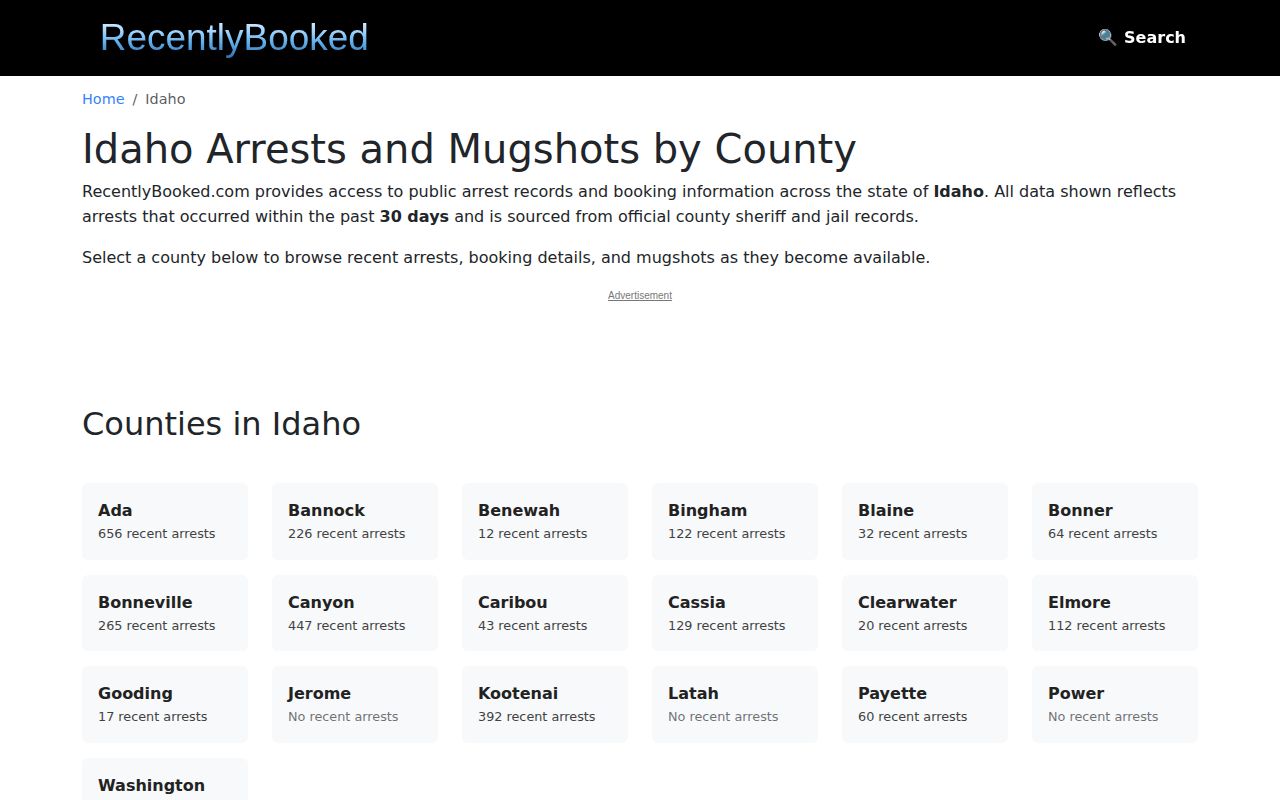
Idaho arrest directories only take you so far. A listing there proves a page exists, not that a person sits in custody or that the roster is complete. The Mugshots.com Idaho section carries the same catch, since it is unofficial too.
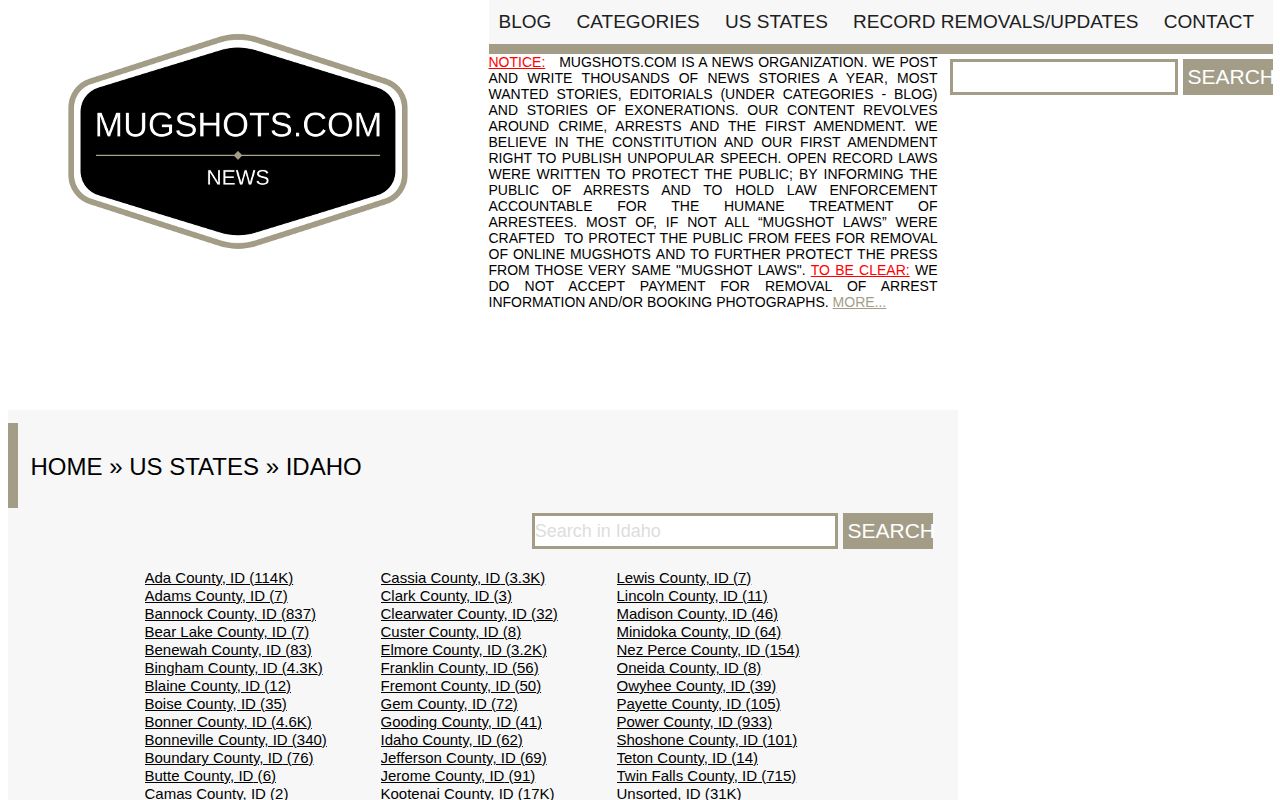
Treat these directory pages as starting points. Verify every name, date, and custody status against the county source itself.
Idaho Arrest Listing Corrections
Fixing a listing here is not the same as fixing the official record. A publisher can edit its own copy. But the county and the court keep their own files. Requests need supporting facts or legal papers. Approval is never promised. The RecentlyBooked record update policy shows how one secondary publisher handles that review.
A newsroom corrects its published story. The county custodian corrects the government record, and a court order can change official access without pulling copies that already exist elsewhere on the web.
Idaho Weekend Arrest Logs Can Lag
Idaho sets no single rule for weekend posting. Twin Falls County updates its daily reports Monday through Friday, holidays aside. So a weekend booking can sit unlisted. It waits until court staff file the case or the dated report refreshes. Other counties state no schedule at all. A quiet Sunday log proves nothing. An arrest may have happened anyway.
Match the dates, not just the name on the row. The booking date marks when a person entered jail. A dispatch log marks the call. A press release may follow an investigation, and the docket comes later. Save the PDF or page date when you need proof of a past arrest report.
Weekend check: Look at the county's live custody view first. Ask its records unit whether a dated report is pending. A missing row never means no arrest occurred.
Note: A quiet weekend log is not proof that no booking took place in the county that day.
Idaho Arrest Archives and Retention
Published windows vary widely across Idaho. Ada County keeps a five-day selector. Blaine uses numbered pages, Kootenai posts a daily PDF, Twin Falls publishes weekday reports, and Bannock relies on its AlertSense history. Some rural counties offer no web archive past a current view. None of these web windows sets what the government must retain.
When an entry vanishes, ask the arresting agency. You can also ask the county records custodian for the booking record. List the name, date, county, agency, and record type. The Idaho State Archives holds older state, county, city, and court records. It does not offer current booking-photo searches. Its 2008 retention schedule guides management; it promises nothing about county web pages.
| Record series in the guide | Stated direction | What it does not promise |
|---|---|---|
| Booking records and mug shots | Homicide or felony records are listed as permanent; misdemeanor records as administrative closure plus five years. | It does not set an online roster term. |
| Communications logs | Administrative closure plus one year. | Local agency practice and current schedules may differ. |
| Expunged or sealed records | Listed as permanent, with access controlled by the court order. | Public access is not the same as record retention. |
| Records request files | Administrative closure plus one year. | This is the request file, not the requested booking record. |
The schedule's trigger is "administrative closure," not a fixed span after the arrest. A roster may drop someone at release. The official booking file survives, and a copied page can outlive both. Archive staff keep research requests separate from formal public-record requests. So identify the person, the county or institution, the date range, and any case or booking number. Say whether you want a copy or a scan. Idaho residents generally get the first two labor hours and the first 100 pages free. Reproduction or special handling may still carry a cost.
Court orders, juvenile protections, and local access rules decide what a custodian can release.