
Idaho State Police Arrests
Idaho State Police (ISP) is the statewide patrol and law-enforcement agency. Its duties span traffic enforcement, investigations, criminal-history services, and coordination with local departments. An arrest by ISP can start several ways. A traffic stop, an investigation, a warrant, or a joint operation can each begin the process. All of them lead to one custody point. The public-facing systems are separate, so the search path depends on the question. A dated release or case map may explain why troopers were involved. Not every ISP arrest shows up in a public ISP list. Booking happens through custody. That step places the record and any booking photo with a county jail. The official ISP News Releases page is the natural starting point. It covers public arrest and enforcement stories, carrying dated cases, operations, and safety events rather than a person-by-person booking roster.
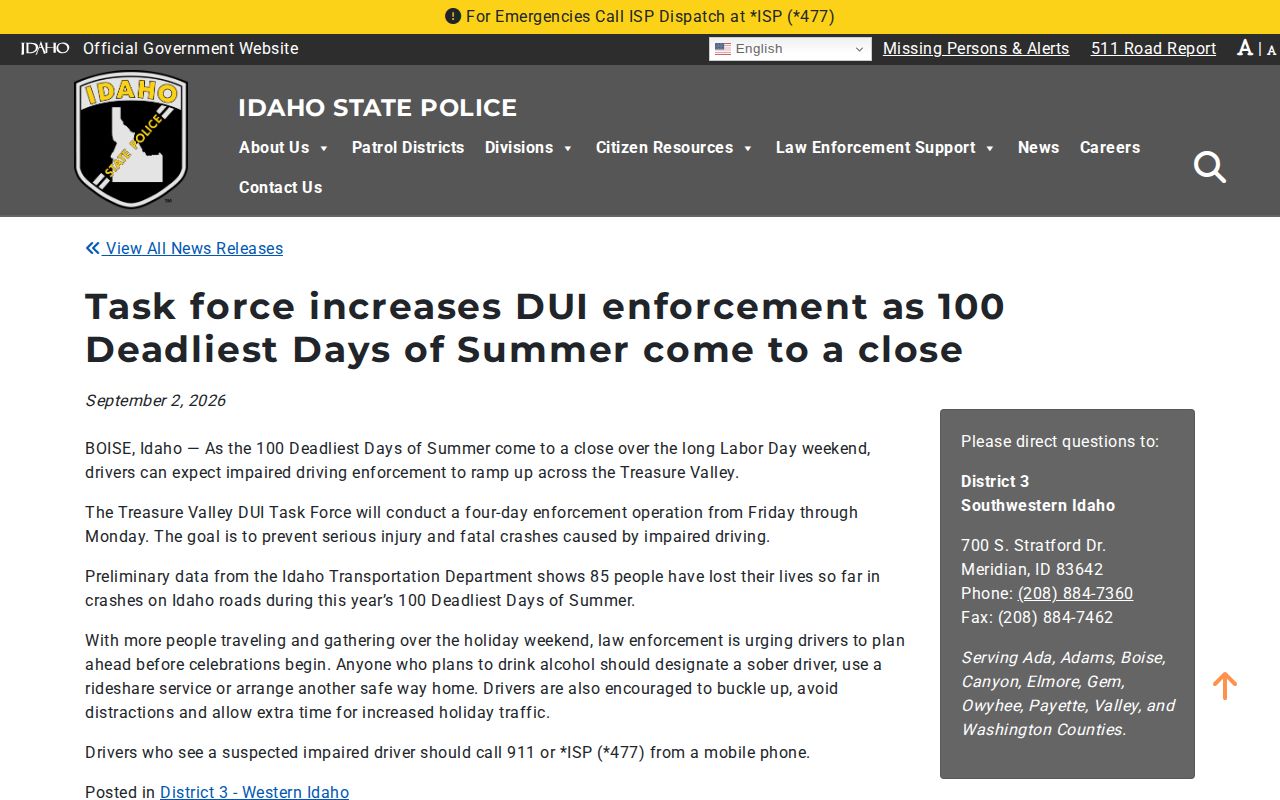
ISP posts dated newsroom entries on selected incidents, while county jail records hold the booking-level view.
Where ISP Publishes Arrest News
ISP spreads its public material across several channels, and they answer different questions. A newsroom post is a chosen narrative. Citizen Connect maps incidents and cases. NIBRS supplies statistics. The Regional Communications Centers keep agencies talking, but no stable daily dispatch or named arrest log comes out of them.
| Official channel | What it can show | What it does not replace |
|---|---|---|
| ISP News Releases | Dated crash, public-safety, missing-person, task-force, DUI, enforcement, and other selected stories. | A complete list of ISP arrests or county bookings. |
| Citizen Connect and the linked Socrata interface | A recent-incident and case map; location, time, or category details depend on the current view. | A named custody roster, booking-photo feed, or final court result. |
| Crime in Idaho / NIBRS arrest distribution | Aggregate arrest counts for annual or other reporting periods and available filters. | Live names, photos, booking dates, or an individual case disposition. |
| Regional Communications Centers | The North center serves Districts 1 and 2; the South center serves Districts 3 through 6. | A public daily dispatch log or complete named arrest feed. |
| ISP district social-channel notice | The 2019 notice describes district accounts used for immediate in-progress traffic information. | A complete arrest archive; current account availability should be checked at ISP. |
Citizen Connect works well for seeing where incidents happened and how they group into categories. Its interface can change. The visible fields follow the current dataset. A point on the map proves nothing about a booking or a booking photo. It says nothing about a court outcome either. To confirm custody, go to the jail that took the person in. The ISP Citizen Connect page explains the map and links to the live view. Treat it as an incident tool, not a roster of named arrests.
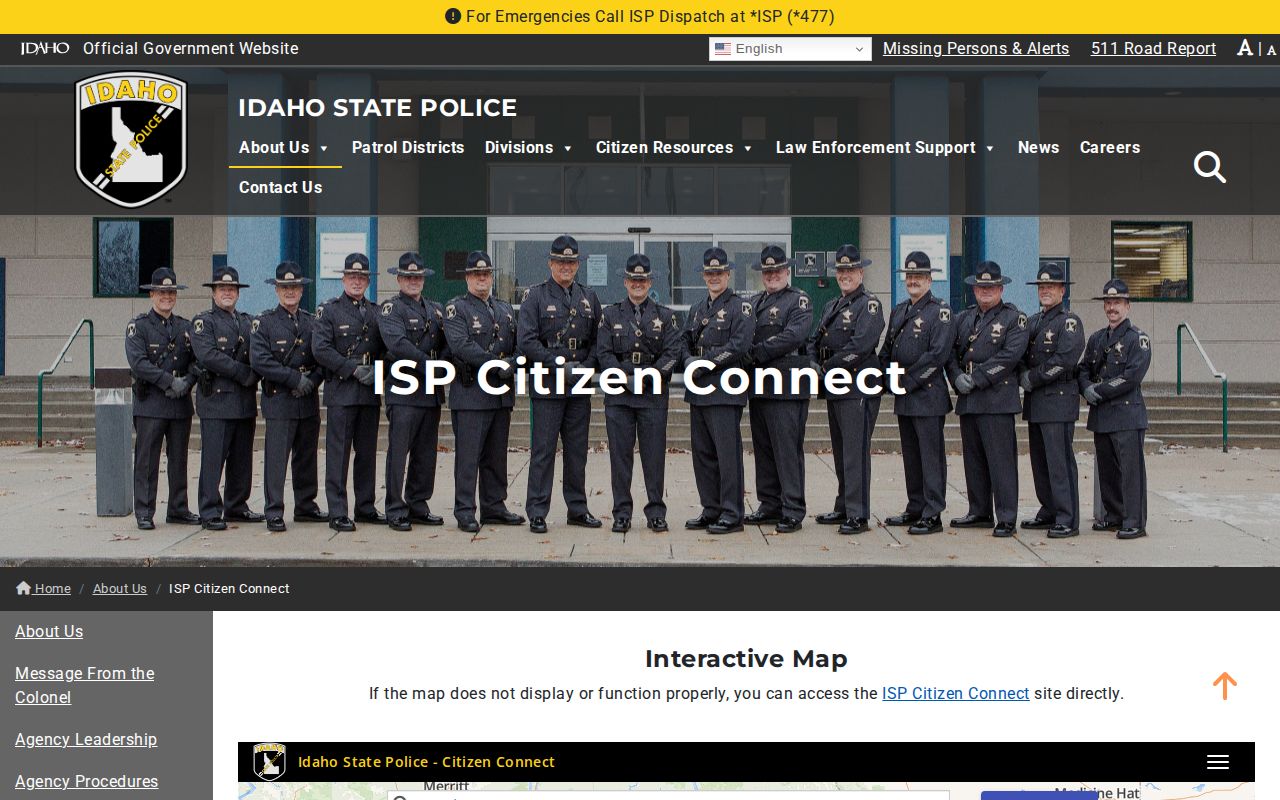
Use the map to view incidents. For a booking record or booking photo, contact the county office that holds the jail file. Note: A map point, aggregate count, or news post can describe one event without naming everyone arrested.
How to Trace an ISP Arrest
Begin with the source that fits your question. A news story confirms that ISP described an operation publicly. A county jail roster or same-day booking view works better here. Use it when someone sits in local custody. Incident report requests go to ISP itself when the agency holds that record.
- Check the ISP newsroom. Search the official release page for a public account of the incident, location, operation, or agency involvement. A missing story does not show that no arrest occurred.
- Identify the county that holds custody. Use the arrest location as a starting clue, then confirm which county jail accepted the person. Housing may differ from the arrest site when the arresting jurisdiction transfers custody or another agency has a hold.
- Check the county's current booking source. Find the official jail roster or newest-bookings view for that custodian. The statewide same-day arrest landscape explains how Idaho county views differ.
- Request the record from its holder. Use the ISP Public Records Center for ISP incident material. Ask the county records custodian for a booking record or photo held by the jail.
These steps follow the record across agencies. They never mistake a news post for a custody result. A person may have been cited and released. Transfers and holds under another jurisdiction happen. Delayed bookings happen too. Each step should match the agency and the moment the record was made. The statewide County Directory routes to local sources when custody sits with a county jail.
No single live statewide list of every named ISP arrest exists. So when a search comes up empty, take the request to the responsible agency. Do not fall back on a stale unofficial list.
Six ISP Districts, One Statewide Agency
Patrol work is split into six districts. They are District 1 Northern, District 2 Central, District 3 Western, District 4 Southern, District 5 Southeastern, and District 6 Eastern. The district map shows county assignments. That detail can narrow a release or identify the office that handled an event. Districts are operational regions, not booking systems. District 3 covers Ada, Adams, Boise, Canyon, Elmore, Gem, Owyhee, Payette, Valley, and Washington counties. District 4 spans Blaine, Camas, Cassia, Gooding, Jerome, Lincoln, Minidoka, and Twin Falls counties. For the rest, check ISP's current district map instead of guessing from a nearby city.
The structure shapes public information too. ISP News Releases gathers dated statewide material, while district social accounts share immediate traffic updates. A short traffic post helps during a closure or patrol action. It is not an arrest archive. Names, custody status, and booking photos stay with the record-holding agency. The ISP homepage opens the door to districts, services, and the newsroom. It stands apart from county jail pages.

Read the district page for agency context. Then follow the custodian for the arrest record. A patrol region alone never tells you where someone is held. Note: A district marks ISP's patrol region; the county that accepts custody controls its booking feed and photo policy.
Requesting ISP Arrest Records
For public-records requests, ISP skips its general contact form entirely. Instead, it routes people to the ISP Public Records Center. The agency switched from GovQA to JustFOIA in December 2024, and its transition notice confirms that pending requests carried over. Written procedure appears in EHP-02-06 Public Records Requests. That PDF has not always been available, so confirm the link opens before counting on any procedure detail.
A strong request describes one specific record. Name the person in full. Give a date or a narrow date range. Add the county, plus a case or incident number if you have one, and the district when known. Say plainly whether you want an arrest report, an incident report, or an existing booking photo. Keep in mind that a booking image held only by a county jail must come from that county, not from ISP.
- Open the ISP Public Records Center. Choose the new-request path and the form that fits the record sought. The portal also offers request tracking and an archive search.
- Describe the record with useful limits. Give the person or event, county, date range, and incident or case number if available. Ask for a nonexempt record, and name the specific item rather than asking for a broad statewide dump.
- Review the response and any estimate. Idaho law allows actual labor and copy costs after the free threshold, and an agency may estimate or seek advance payment for a large or specialized request.
- Check the response deadline and appeal notice. A denial should state its legal basis and appeal route. If a response is not sent within the statutory period, the request is treated as denied.
Idaho law sets a clock for answers. Idaho Code §74-103 generally gives ISP three working days to grant or deny a clearly identified request from an Idaho resident. Retrieval can take longer, and the agency must give notice first. The outer response period then stretches to ten working days. Nonresident requests get a longer initial window. Current guidance allows up to 35 days. Those deadlines govern responses, not a promise that the records arrive in full. Fees follow their own rules. An Idaho resident gets a break. The first two hours of labor and the first 100 pages come without charge. Beyond that threshold, statutory costs for labor, copying, and media may apply. The statute itself and the Attorney General's Public Records Law Manual lay out the full framework. The ISP JustFOIA portal handles filing and tracking.
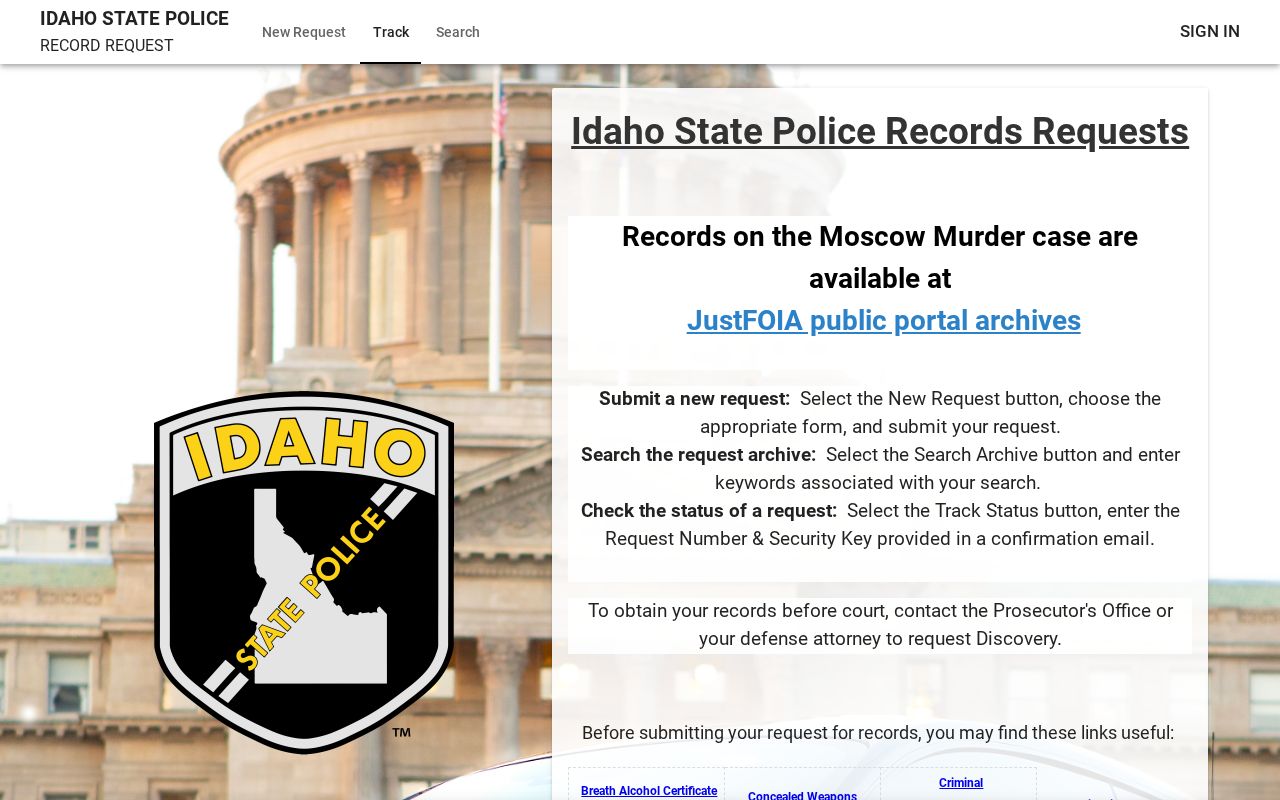
Keep your portal request number and status key handy. You may still need a separate request to the county jail for its booking record. Track both requests separately. Note: ISP may redact exempt investigative or personal details from what it releases, and the county jail may hold a separate booking image.
What DUI Releases Can Confirm
ISP announces some traffic-enforcement work through dated releases. One example comes from September 2, 2026. That release, “Task Force Increases DUI Enforcement as 100 Deadliest Days of Summer Come to a Close”, describes a four-day Treasure Valley DUI Task Force operation over Labor Day weekend. It reads as an operation-level account. There is no daily arrest list inside it. The release makes no promise of a named entry for every stop, citation, arrest, or booking. What a release can establish is what ISP chose to announce. That includes the operation's stated purpose, its broad time frame, the agencies involved, and the public-safety message. Aggregate outcomes appear when the agency reports them. Treat the post as an announcement, not a case file. A later charge or court hearing will not appear in the news story. The Regional Communications Centers fill a different role. Their public description explains dispatch coverage. They publish no complete named arrest log.
Where ISP Arrests Are Booked
ISP runs patrol and investigative services across Idaho. It does not operate the county jails. An ISP arrestee taken into county custody is normally booked into whichever county jail the arresting jurisdiction selects. The county roster or feed is the public route to the booking entry and photo. Knowing the arrest county helps. It does not guarantee where the person ends up. Custody can shift through a transfer, another agency's hold, or a move into a state or federal system. Confirm the custodian before treating a no-result as final. Each county also controls its own roster fields, photo display, and posting pace.
A disposition is the court's recorded outcome of a case. Sentences move some people into state custody. The Idaho Department of Correction Resident/Client Search tracks that post-sentencing custody trail. It is not a fresh-arrest roster. ISP reports, county booking files, and state custody records each answer a different question. Follow the record's creator. Verify current status with that custodian.